Guide 10 min read
Lomi Lomi, Thai and Balinese massage: how they differ and how to learn them
Three Eastern massages, three different ways of working. A comparison of tools, pace and workstation, plus tips on how to choose a course.

Lomi Lomi, Thai massage and Balinese massage often end up in one bag labelled “Eastern massage”. A client sees three exotic names on the price list, and someone who wants to learn them sees three similar-sounding courses. At the table, however, they are three different ways of working: different tools, different pace, a different role for oil and different demands on the therapist's body.
This article sorts out these differences from the point of view of someone who wants to perform these massages professionally. It does not decide which one is better. It shows what each of them is, what it takes to learn it and how to check whether a course teaches it in a version you can bring into your practice.
Where these three massages come from
Thai massage grew out of traditional Thai health care. In 2019 UNESCO inscribed it, under the name Nuad Thai, on the list of the Intangible Cultural Heritage of Humanity. The UNESCO description mentions work with the hands, elbows, knees and feet, and the “sen” lines through which, according to this tradition, energy flows in the body. It is also often called Thai yoga massage, because a large part of the session consists of passive stretching resembling yoga poses.
Lomi Lomi is a traditional Hawaiian massage. In the version taught in massage schools today, it stands out for long, flowing strokes made with the hands and forearms, often along the whole length of the back or leg in a single sweep.
Balinese massage comes from the Indonesian island of Bali and combines several ways of working in one treatment: acupressure, elements of reflexology, deeper tissue work and flowing strokes with oil.
Each of these massages has many schools and variants. A course always teaches a specific version, so the name of the technique in the programme is only the start of your questions, not the answer to them.
What the hands do, and what the rest of the body does
The simplest way to compare these massages is by what the therapist works with and what the client's situation is.
- Thai massage You work with your hands, thumbs, forearms, elbows, knees and feet. The client is clothed and, in the traditional version, lies on a mat on the floor. Pressure alternates with stretching: you guide the client's limbs, turn them onto their side, sometimes sit them up. No oil is needed.
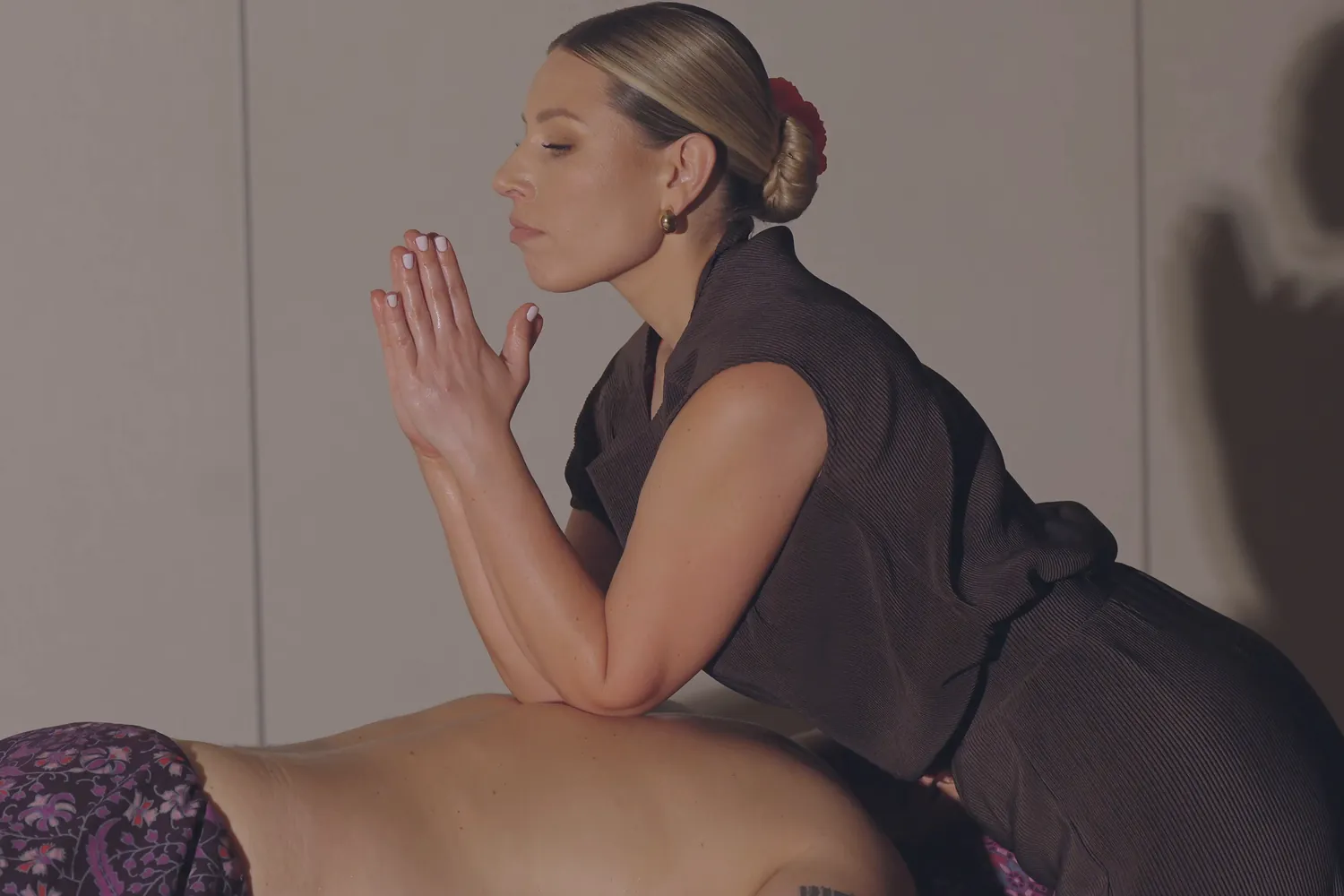
- Lomi Lomi You work with your hands and forearms, and the forearms take over a large part of the work. The strokes are long and flow into one another. You work on bare skin, with oil, and you move along the table yourself, shifting your weight from one leg to the other.
- Balinese massage It combines precision with flow. Thumbs and fingers work on specific points, in the spirit of acupressure and reflexology, and between these sections come long, relaxing strokes with oil. The pressure can be firmer than in a relaxation massage, but the whole treatment is still meant to relax.
This comparison leads to a practical conclusion. Thai massage teaches you to work with your body weight and to guide the client through movement. Lomi Lomi teaches continuity and rhythm. Balinese massage teaches you to dose pressure on a point without losing the flow. These are three different skills, and only together do they give you freedom in Eastern bodywork.
Pace and what the client feels
Thai massage is the most dynamic of the three, even though the client does nothing themselves. Their body is moved, stretched and placed in successive positions, so the session has a clear rhythm of change. For some people that is exactly what they are looking for. Others prefer to lie still, and for them one of the other two massages will be a better fit.
Lomi Lomi has the steadiest rhythm. The strokes are long, there are no sharp transitions, and the forearm or hand barely leaves the body. Clients often describe it as the most relaxing of the Eastern massages.
Balinese massage sits in between. It has moments of strong, targeted pressure, but each of them is woven into a flowing sequence, so the treatment does not turn into a series of presses. It works well for clients who find a classic relaxation massage too gentle.
Workstation: mat or table
It is worth asking about this before signing up for a course, because it decides whether the new skill makes it onto your price list.
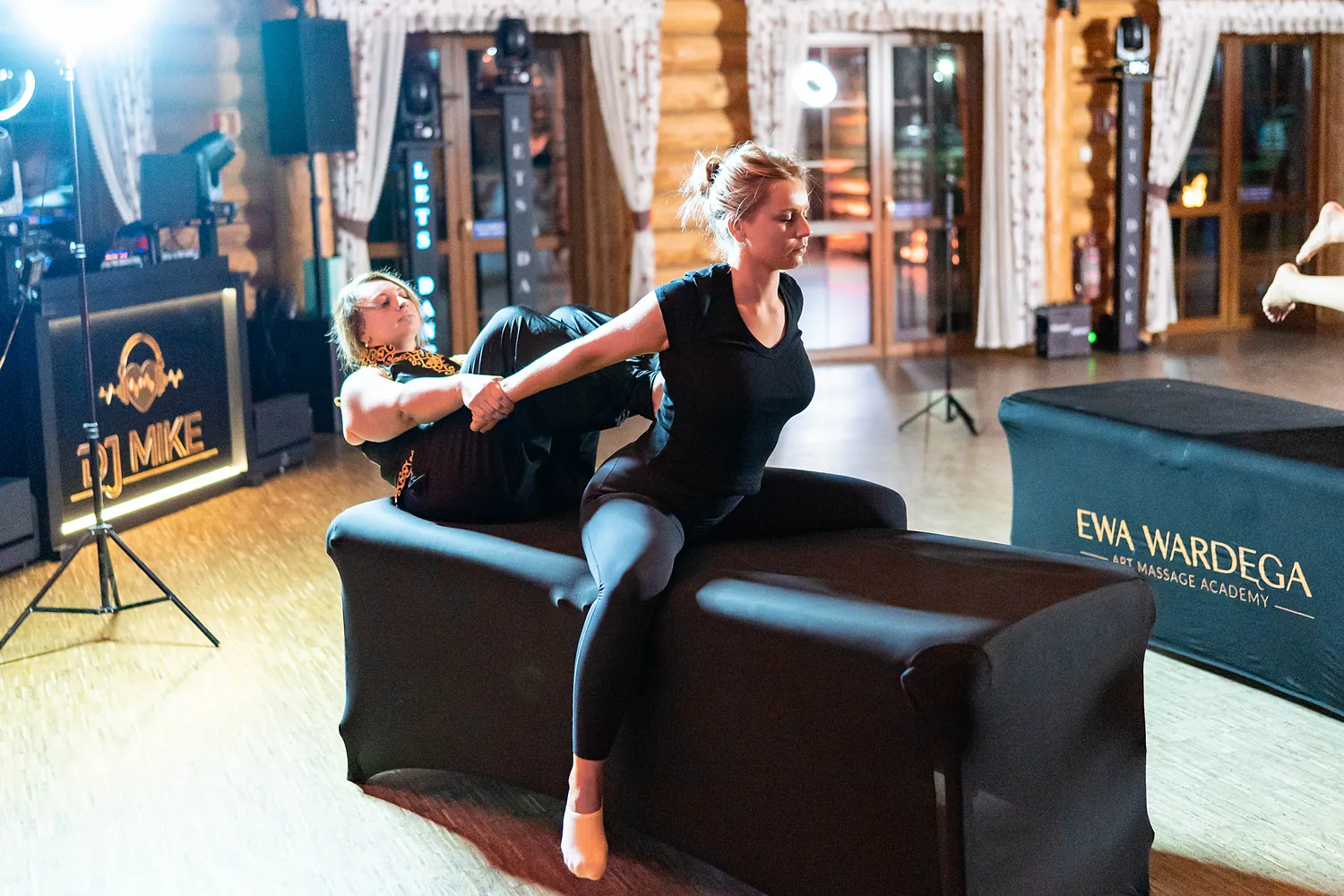
Traditional Thai massage is performed on a mat on the floor. It requires flexible knees and hips from the therapist and free space around the mat from the practice. Many practices and hotels, however, only have tables, which is why some schools teach a version adapted to the table. Some of the stretches look different in it, because the therapist works from table height and sometimes sits or kneels on its edge. What remains is what matters most in Thai massage: pressure combined with stretching and work with body weight.
Lomi Lomi and Balinese massage are usually performed on a table, with oil. Lomi Lomi also needs space around the table, because the therapist walks along it during the long strokes. Both require towels and sheets that have to be washed after the treatment. When planning the service, it is worth adding time to prepare the workstation and to let the client get off the table calmly after the treatment.
Comparison in one table
| Feature | Thai massage | Lomi Lomi | Balinese massage |
|---|---|---|---|
| Origin | Thailand | Hawaii | Bali, Indonesia |
| Main tools | hands, thumbs, elbows, knees, feet | forearms and hands | thumbs, fingers and hands |
| Oil | no oil | with oil | with oil |
| Client | clothed | bare skin, covered with a towel | bare skin, covered with a towel |
| Rhythm | dynamic, with stretching | steady, long strokes | flowing, with targeted pressure |
| Where it is done | mat or table | table | table |
| Hardest part to learn | guiding stretches safely and working with body weight | continuity of movement and forearm work | dosing pressure without losing the flow |
Which massage to suggest to a client
Once you have all three in your hands, the choice becomes part of the conversation before the treatment. A few situations come up often enough that it is worth having a ready answer.
The client wants to lie still and rest Lomi Lomi comes closest: long strokes, few changes of position, a steady rhythm.
The client says a regular massage is too gentle for them This is where Balinese massage works well, because firmer, targeted pressure is part of the sequence rather than an add-on on request.
The client sits all day and likes to stretch A natural candidate for Thai massage, as long as they feel comfortable having their body moved and positioned.
The client does not want to undress Traditional Thai massage is done fully clothed, so the issue never comes up.
Whatever the technique, the same safety rules apply. Fever, inflammation, fresh injuries, conditions in which work on the tissues is contraindicated, and any doubt about the client's health are situations in which the treatment is postponed and the client is referred to a doctor. Stretching in Thai massage adds one more rule: the range of motion is set by the client's body, not by the sequence from the course.
What you will not learn from a video
You can watch each of these massages online in a few minutes. Learning one from a recording is much harder, and for a different reason in each case.
In Thai massage, a video shows the shape of a stretch, but not how much force to use or at what moment to stop. That feel comes only through repetition under the eye of someone who corrects the therapist's body position. A mistake in the stretch costs the client, and a mistake in your own body position costs the therapist.
In Lomi Lomi, the hardest part is continuity. The individual strokes are simple, but joining them into one line without breaks or jerks takes work from the legs and hips that is barely visible in a recording.
In Balinese massage, the difficulty is dosing. The same thumb pressure is just right for one person and too strong for another. Only practising on different people and getting feedback from the person on the table teaches this.
Lomi Lomi and Thai massage also shift a large part of the work from the hands to the forearms and body weight. For therapists whose wrists are bothering them, that is an extra argument. More on this in the article on how to work so your wrists hold up.
How to choose an Eastern massage course
General rules for choosing a school, from group size to the full cost, are covered in the guide to choosing a massage course. With Eastern massage courses, it is worth asking about a few additional things.
- Table or mat If you work, or want to work, in a practice or hotel that has massage tables, check whether Thai massage is taught in the table version.
- Named techniques and level The programme should say which massages you learn and at what level: basic or advanced. The phrase “Eastern massages” without technique names tells you nothing.
- Share of practice Ask how much time you will spend at the table and how much in front of a projector. With three techniques in a few days, theory quickly eats into practice.
- Who teaches Check whether the person teaching your date performs these massages themselves and whether their background can be verified outside their own website.
- What the certificate confirms A course certificate confirms that you completed the training. It is not a massage technician diploma and does not entitle you to practise a medical profession. Details are in the questions at the end of the article.
- What comes next It is good when a course has a next level where the same techniques are developed further, instead of starting everything from scratch.
This is how it works in the courses taught by Ewa Wardęga. The Eastern massage course, basic level (Orient Body Flow® Adept) lasts three days and covers the basic versions of Thai massage at the table (Dynamic Table Thai), Balinese massage (Bali Harmony) and Lomi Lomi (Lomi Lomi Excellence). No experience is required, and most of the time is spent working at the table. For graduates of this level and massage therapists who have worked with Eastern techniques for years, there is the Eastern massage course, advanced level (Orient Body Flow® Master): Thai massage at the table in the warrior variant with scarf work, advanced Lomi Lomi Evolution techniques and A‑Shiatsu, that is, massage performed with the feet using scarves. Current dates and cities are on the pages of both courses.
In short
- Thai massage: client clothed, no oil, pressure and stretching, whole-body work. Traditionally on a mat, in a practice also at the table.
- Lomi Lomi: oil, long forearm strokes, a steady rhythm, the therapist moving along the table.
- Balinese massage: oil, acupressure and elements of reflexology woven into a flowing sequence, firmer pressure than in a relaxation massage.
- Learning: each of them requires a different skill, so they are best learned at the table, under the eye of someone who corrects you as you go.
- Course: check table or mat, named techniques, the share of practice, the person teaching and what the certificate confirms.
Frequently asked questions
Can you learn three massages at once, starting from scratch?
Yes, if the course teaches their basic versions and you spend most of the time at the table. Three techniques in a few days is a lot, so regular practice on different people matters after the course. Advanced versions only make sense once the basics flow smoothly.
Is Thai massage at the table still Thai massage?
It keeps what matters most in this technique: pressure combined with stretching and work with body weight. The working height and some positions change, because not every stretch from the mat can be transferred to the table in the same form. The table version does not replace the traditional one, but it lets you bring Thai massage to places where a mat will not fit.
Which of these massages puts the least strain on the hands?
Lomi Lomi, in which the forearms do a large part of the work, and Thai massage, in which pressure comes from body weight. Balinese massage asks more of the thumbs, so hand positioning matters especially in it.
Does a certificate from an Eastern massage course give you the rights of a massage technician?
No. Since 26 March 2024, the massage technician (technik masażysta) has been one of the medical professions regulated by the Polish Act of 17 August 2023 on certain medical professions. Among other things, the Act requires a person practising this profession to hold qualifications obtained at a technical secondary school or a post-secondary school in the massage technician profession, confirmed by a diploma, and to be entered in the Central Register of Persons Authorised to Practise a Medical Profession, and the professional title itself is protected by law. A course certificate confirms that you completed the training and the programme it covered. This article is not legal advice: if you are wondering which services you can offer after a course in your situation, ask a lawyer.
What is the difference between the beginner and the advanced level?
The basic level teaches the basic versions of Thai massage at the table, Balinese massage and Lomi Lomi. The advanced level is for graduates of the basic level and massage therapists who have worked with Eastern techniques for years. It extends Thai massage with the warrior variant and scarf work, Lomi Lomi with techniques from the Evolution level, and adds A‑Shiatsu, that is, massage with the feet. The basic level is the better place to start.
If, after reading this, one of these massages feels closer to you than the others, the easiest way to find out is at the table. The dates of all trainings are in the schedule.
Author: Ewa Wardęga, Master of Physiotherapy. Sources: description of Nuad Thai on the UNESCO Intangible Cultural Heritage list (inscribed in 2019); Polish Act of 17 August 2023 on certain medical professions, consolidated text: Journal of Laws 2025, item 1730; course programmes described on ewardega.pl, as of October 2026.
In this article
- 01Where these three massages come from
- 02What the hands do, and what the rest of the body does
- 03Pace and what the client feels
- 04Workstation: mat or table
- 05Comparison in one table
- 06Which massage to suggest to a client
- 07What you will not learn from a video
- 08How to choose an Eastern massage course
- In short
- 09Frequently asked questions